
Big Ambitions Fast Food Restaurant Guide
How to open and run a profitable fast food business without burning out on the grill.
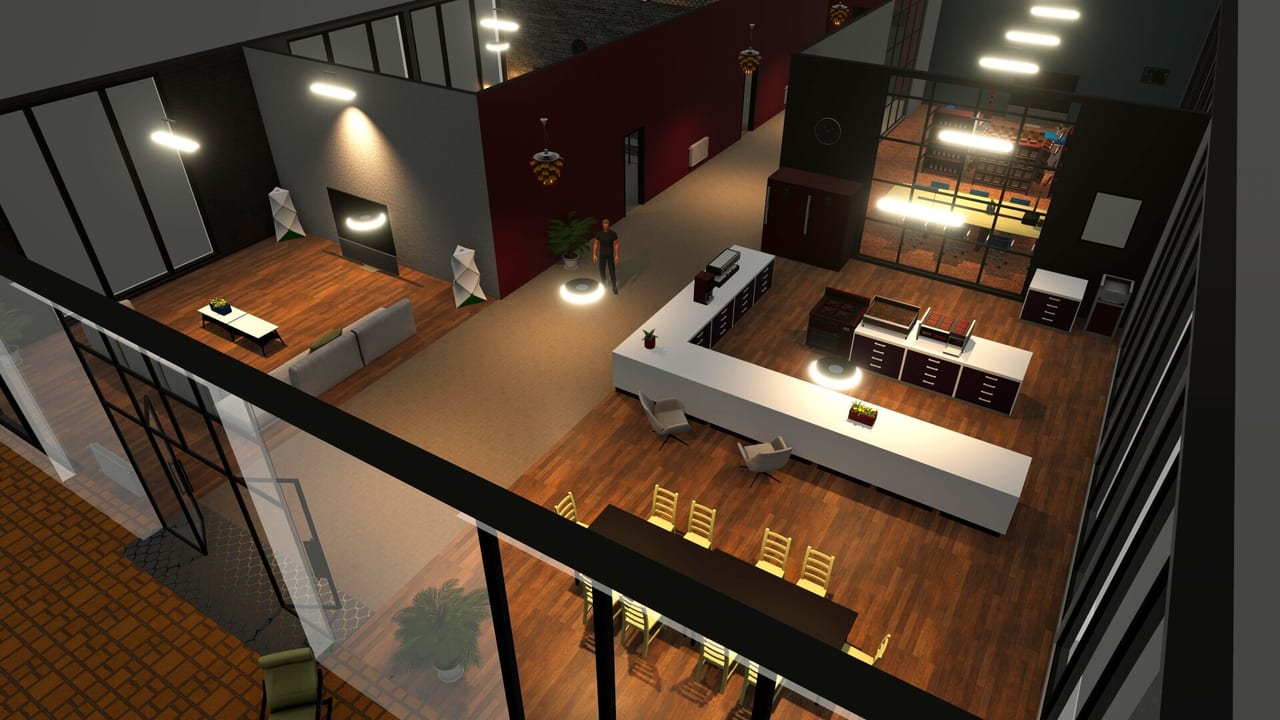
Fast food is one of the most popular business types in Big Ambitions. It starts easy, scales hard, and can print money once the supply chain, staffing, and opening hours line up. This guide covers the 1.0 setup: requirements, furniture, employees, products, suppliers, layout tips, and the traps that kill otherwise profitable restaurants. Pair this with the product ranking for knowing what to stock, and the opening hours tool for knowing when to close.
Single-player: nobody else watches the fryer. If the staff is undertrained or the logistics manager is skipping deliveries, a fast food shop bleeds money faster than almost any other business type.
Business requirements
A Fast Food Restaurant needs:
- A retail lease in any commercial neighborhood.
- At least one employee trained in Customer Service.
- At least one employee trained in Cleaning.
- A Cash Register on a counter or cabinet (Checkout Counter Left or Right will not work).
- Food products from a wholesaler.
Unlike some retail shops, fast food requires staff on the floor, not just at the register. Skipping the cleaner is the most common beginner mistake. A dirty restaurant loses customers mid-shift even if the register is staffed.
Products and suppliers
Fast food shops sell: pizza, French fries, chicken kabob skewers, burgers, salad, ice cream, apples, bananas, soda cans, and energy drinks. Each product comes in boxes from a wholesaler. The boxes have different sizes and prices.
Community data shows pizza, burgers, and soda as the core high-turnover basket for most fast food locations. Ice cream and energy drinks work as premium add-ons in hot neighborhoods. Salad is seasonal in some player reports; check Market Insider before committing floor space to it.
Supplier strategy: use a warehouse with van delivery for the first location so you are not driving boxes yourself. The warehouses guide explains the bay, vehicle, and logistics manager chain. Without that chain, you will spend real hours ferrying food across the map.
Employee setup
Fast food needs at minimum:
- One Customer Service employee for the register and food counter.
- One Cleaning employee to keep the dining area presentable.
Better setups add a second Customer Service worker for busy shifts and a Logistics Coordinator if the restaurant is warehouse-fed. Schedule Customer Service for the full open window. Schedule Cleaning for opening, midday, and closing.
Uniforms matter in 1.0. The Assign Uniforms button was fixed in the September 2026 patch (Build 3672). Use it to bulk-apply clothing presets so staff look consistent without dressing each one manually.
Customer Service skill affects sales speed. Cleaning skill affects how long the dining area stays presentable between rounds. Higher skills mean fewer staff needed per shift.
Opening hours trap
Fast food is heavily hour-weighted. A default 8 a.m. - 4 p.m. window is almost always wrong for a burger or pizza shop. The lunch rush hits 11 a.m. to 1 p.m. The dinner rush hits 5 p.m. to 8 p.m. Running 8 - 4 means you miss both.
The opening hours tool has neighborhood-specific hour recommendations. For fast food in most Manhattan districts, the practical minimum is 10 a.m. - 10 p.m., seven days a week. 24/7 works in high-traffic areas like Midtown or near the subway.
Advertising a 15-customer room until the promotion bar is full wastes budget. Traffic plus marketing caps at 100% promotion. Extra billboards past that cap are a vanity cost.
Layout tips
The Cash Register must sit on a counter or cabinet. Checkout Counter Left or Right will not function as a register. Place the register near the entrance so customers can pay without crowding the food prep area.
Storage in the back should be larger than you think you need. Food products come in boxes that stack. A small storage room creates stockouts mid-rush.
Food prep counters go in the middle. Customer seating, if your lease includes dining space, should be near the counter but not blocking the exit.
Community blueprints on Steam Workshop (Competitive line from EA 0.11) have tested layouts for every building size. Subscribe after you have built one restaurant by hand so you understand what the blueprint is optimizing for.
Common problems
Stockouts mid-rush: The logistics manager is skipping deliveries or the warehouse vehicle limit is too low. Check the delivery route in BizMan.
Dirty dining area: Only one cleaning employee on shift or the Cleaning worker has low skill. Add a second cleaner or retrain the existing one.
Register not working: The register is on a Checkout Counter instead of a regular counter or cabinet. Move it.
Low sales despite traffic: The products on the shelf do not match what Market Insider shows as hot for that neighborhood. Rotate stock.
Profitability
Fast food can be very profitable once the setup is right. Community data shows net margins averaging 15-25% on well-run locations in good neighborhoods. The key variables: rent level, staff cost, product markup, and whether the shop runs at the right hours.
The make money page has the broader financial picture. This guide is the operational layer on top of it.
For running multiple restaurants, see the employees guide for HR systems and the headquarters page for purchasing agents that automate the supply chain across a chain.
Frequently Asked Questions
Quick answers to the most common questions.
What employees does a fast food restaurant need in Big Ambitions?
At minimum: one Customer Service worker and one Cleaning worker. Both are required for the shop to run properly.
Why is my Cash Register not working?
The register must sit on a counter or cabinet. Checkout Counter Left or Right will not function as a register. Move it to a regular counter.
What products should I sell at a fast food restaurant?
Pizza, burgers, soda, and French fries are the core high-turnover basket. Ice cream and energy drinks work as premium add-ons.
What are the best opening hours for fast food?
10 a.m. to 10 p.m. minimum for most Manhattan locations. 24/7 works in high-traffic areas. Avoid 8 a.m. - 4 p.m. which misses both lunch and dinner rushes.