
How to Make Money in Big Ambitions
Volume, location, and a shop that stays open — not a $400 jewelry daydream.
Making money in Big Ambitions is not one trick. It is a stack: the right basket in the right neighborhood, a building that can actually hold the customers, a shift pattern that matches the business, and a supply line cheaper than Metro. This page assumes you already left the till — if you have not, go back to getting started and hire someone.
The 1.0 economy still punishes empty hours and overlapping shops. It also rewards owning the only decent provider of a hot SKU. Read this together with the business tier list and the product ranking.
Demand is a neighborhood, not a vibe
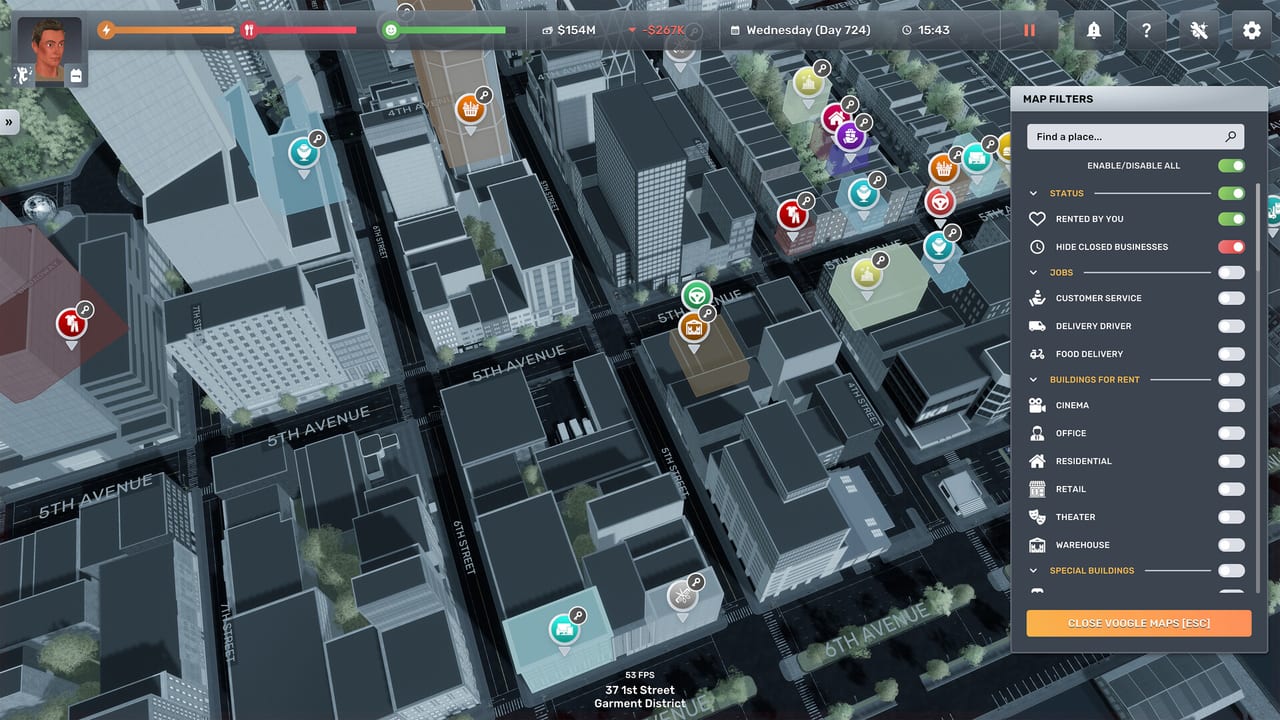
Open Market Insider and sort a district by demand. You want several products that one shop type can sell, all high, with few or zero providers. Class mix tells you how far you can push price: working-class Garment District and Lower Manhattan like volume and modest markups; Midtown and The Hamptons tolerate luxury SKUs if the room looks expensive enough.
Do not open a second shop that sells the same hero products two blocks away. The first shop in an area usually keeps the better share. If you already own gifts in Garment District, shop two should be liquor, clothing, or jewelry — or the same basket in a different neighborhood. The neighborhood ranking lists how those bets usually play.
Price colours (white / yellow / red) are a live satisfaction hint. White is safe. Red is you testing the ceiling. If you are the only shop, you can sit closer to yellow than a contested street can.
Buildings cap your income before ads do
Traffic index is organic walk-ins. Customer cap is the hard hourly ceiling. A beautiful 15-customer A1 will never print a C2’s numbers. When you can afford it, rent the higher cap even if the rent sting is real — you already paid fixtures and stock. Marketing then fills the cap; it cannot break it.
Promotion is roughly traffic plus marketing, capped at 100%. Past that cap, City Ads billboards are a flex. McCain-style cheap campaigns are enough for a small room. Save the expensive boards for a high-cap Midtown box that actually has empty chairs at peak.
Hours and volume beat hero margins
A soda can that clears a dollar, sold all day, often beats a jewelry piece that clears $300 twice. That is why high-turn retail still funds most first empires. Fast food is the exception beginners hit: default 8–4 misses the dinner spike, and kitchen labour is not free. If you must run food, use opening hours and staff the evening, not the tutorial clock.
Retail that already paid rent and filled shelves should usually run long hours. An extra register shift at a low wage is cheap compared with a dark store. Office businesses (law, some services) are different — empty desks at 3 a.m. are pure payroll. Gyms often die after midnight. Nightclubs live on weekends. Copy the competitor’s closed hours only when you can staff them.
Buy cheaper, then stop driving
“You make money when you buy” is the wholesaler lesson. Metro is convenient and expensive. Larger importers and, later, your own warehouse drop cost of goods without touching the shop floor. The moment daily profit is stable, sign an import contract through a purchasing agent instead of doing van runs yourself.
Do not max marketing and ignore supply. An empty shelf with 100% promotion is a billboard for a closed shop. Keep more storage than the last stockout taught you.
Loans, funds, and 1.0 tax
Loans scale with proven daily income. Use them as leverage on a working format, not as life support for a bad location. 1.0 changed deductions enough that huge pre-release tax bills shrank for some players, which makes property during tax cycles more interesting than the old “park everything in Asia Dynamic and ignore buildings” script. Walk the numbers on banking before a second note. Still treat funds as a parking lot for surplus, not as your main business. Casinos are entertainment, not a strategy. Import cost of goods on importing once a warehouse exists.
Buy a rival only when the location is the prize: high traffic, high cap, and a demand board you already understand. Fire low-skill staff the same day and rebuild the layout. A takeover is a renovation project with a logo already on the door.
A weekly money rhythm
- Monday: read demand and rival closures on Market Insider.
- If a gap is real, rent and blueprint in two days, not two weeks — see employees for same-week hiring.
- Staff 24/7 only on formats that actually sell at night.
- Move leftover cash to stock, a better building, or a warehouse, in that order.
- Open the factories page only when one warehouse already feeds multiple shops.
If the graph is flat, the cause is almost never “I need a prettier sign.” It is demand overlap, a tiny customer cap, dead hours, or Metro prices. Fix those four before you dream about The Hamptons.
For a reality check on whether the loop is fun enough to keep playing, the review page is honest about the grind. For patch-driven economy shifts, use the updates hub.
Frequently Asked Questions
Quick answers to the most common questions.
What is the fastest way to make money in Big Ambitions?
Staff a high-demand retail shop in a decent traffic building, buy from a large wholesaler, and stop sitting the till. Then add a warehouse.
Should I run 24/7?
For most retail, yes, because rent and stock are already paid. Not for gyms at 3 a.m. or empty law desks. Check opening hours.
Are expensive products always better?
No. Turnover often beats margin. Jewelry can print if demand and class mix support it; soda in a busy C2 can still win the week.
When should I take a loan?
After the shop shows real daily income. Banks underwrite that number. Spending a loan on a second unstaffed room is how beginners stall.