
Big Ambitions Factories and Production
Build the line that feeds your chain — after the warehouse already works.
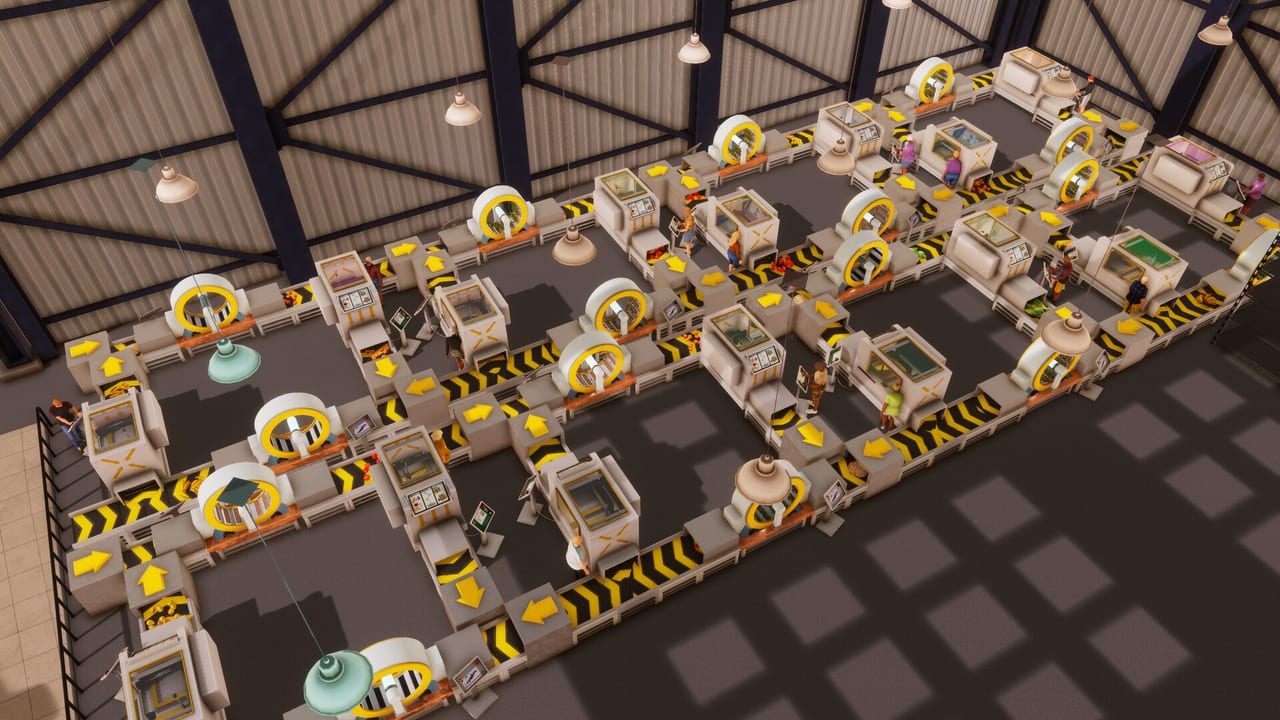
Factories are the late-middle of Big Ambitions, not the opening act. You take raw or semi-raw inputs, run production stations, and push finished goods into the same spine that already stocks your shops. If that spine does not exist, stop and read warehouses plus headquarters. A factory with no truck is a very expensive art installation.
Industry City opened in Early Access 0.9 with P1–P3 and Q1–Q3 lots meant for this. Titans of Industry Supply, Factory Supply Depot, and Stonegood Architecture live there for a reason. 1.0 did not make factories beginner content; it just made the rest of the city richer around them.
What a factory is in this game
A factory is a warehouse-like shell with production stations instead of (or in addition to) pure storage. Each station is tied to a product family: jewelry, electronics, food, beer, tobacco, clothing, and so on. You still need workers, lockers, power-adjacent furniture, and a receiving area for inputs. Default factory blueprints at the Industry City installation firm are worth subscribing to once you understand one handmade line.
Players often ask whether two jewelry stations plus two electronics stations can feed a single C2 jewelry shop that also sells smartwatches. The honest answer: count customers per hour, units per sale, and boxes per machine, then add slack. A 30-customer C2 at peak is not a 30-unit machine if each customer buys two items. Underbuilding means Metro creep. Overbuilding means idle wages. Start with the SKUs that shop already sells, not the full catalogue.
Inputs, not magic
Stations eat ingredients. Beer needs the farm/wholesale inputs the recipe lists. Electronics want components. If the input is also an import, your purchasing agent has to land those pallets in the same depot the station reads from. Splitting input storage across town is how lines starve at 4 p.m.
Food factories look tempting because restaurants feel weak on Metro burgers. They are also fussier: spoilage, more SKUs, and kitchen labour at the shop end. A beer line feeding a nightclub can be cleaner than a full fast-food vertical on your first factory save. Check weekend weighting on the opening hours page before you dedicate a Q-lot to kebabs.
Staffing the floor
Factory workers come from the industrial recruiters, not always from the same office pool as cashiers. Anderson-style campaigns still work for some roles; others need the Industry City agencies. Skill bands matter because a slow station is a hidden stockout. Do not staff 24/7 if the shops you feed are closed — you will fill the warehouse with product nobody can sell until Monday.
HQ still owns the brain: logistics managers route finished goods, purchasing agents keep inputs coming, HR replaces the people who quit. The factory is another destination on the truck, not a replacement for HQ.
Placement and pathing
Put production in Industry City unless you have a narrative reason not to. The lots are sized for machines and trucks. US General Trucks and IC Truckers are next door. A Midtown basement “factory” might be a fun screenshot and a pathing nightmare.
Leave a packing lane. Finished goods that cannot reach a shelf cannot reach a shop. Use the same 2×3 storage logic as a normal warehouse for overflow. Blueprint duplicate is how you copy a tested jewelry cell instead of freehanding a second one crooked.
When not to build
- You still drive Metro runs yourself.
- You have one shop and a dream.
- You want “passive income” and hate spreadsheets. Factories are more clicking, not less, until they are tuned.
- You are chasing a YouTube beer empire on day 40 of a first save. Finish the getting started loop and a three-shop retail chain first.
If a rival already sells the finished good cheaply in that neighborhood, your factory has to beat their buy price, not just exist. The tier list is still the demand document. Production is how you capture margin after demand is proven.
For story context on why the bridge was locked, the early access page covers 0.9. For whether this loop is the fun you wanted, see the review. Factories are the “I already won retail” chapter. They are optional for a good 1.0 save. They are mandatory only if you want the map to say you own the supply.
Frequently Asked Questions
Quick answers to the most common questions.
When should I build a factory in Big Ambitions?
After a warehouse already stocks several shops. Factories replace some imports; they do not replace cashiers or HQ.
Where do I put factories?
Industry City. The P and Q lots, truck dealer, and factory blueprints were added for this.
Can I feed one jewelry store with two stations?
Maybe. Count peak customers and units per ticket, then add slack. Underbuilt lines just send you back to Metro.
Do factories work at night?
They can, but if shops are closed you only fill pallets. Match production to opening hours of the stores you feed.