
Big Ambitions Importing and Purchasing Agents
You make money when you buy — if the truck actually arrives.
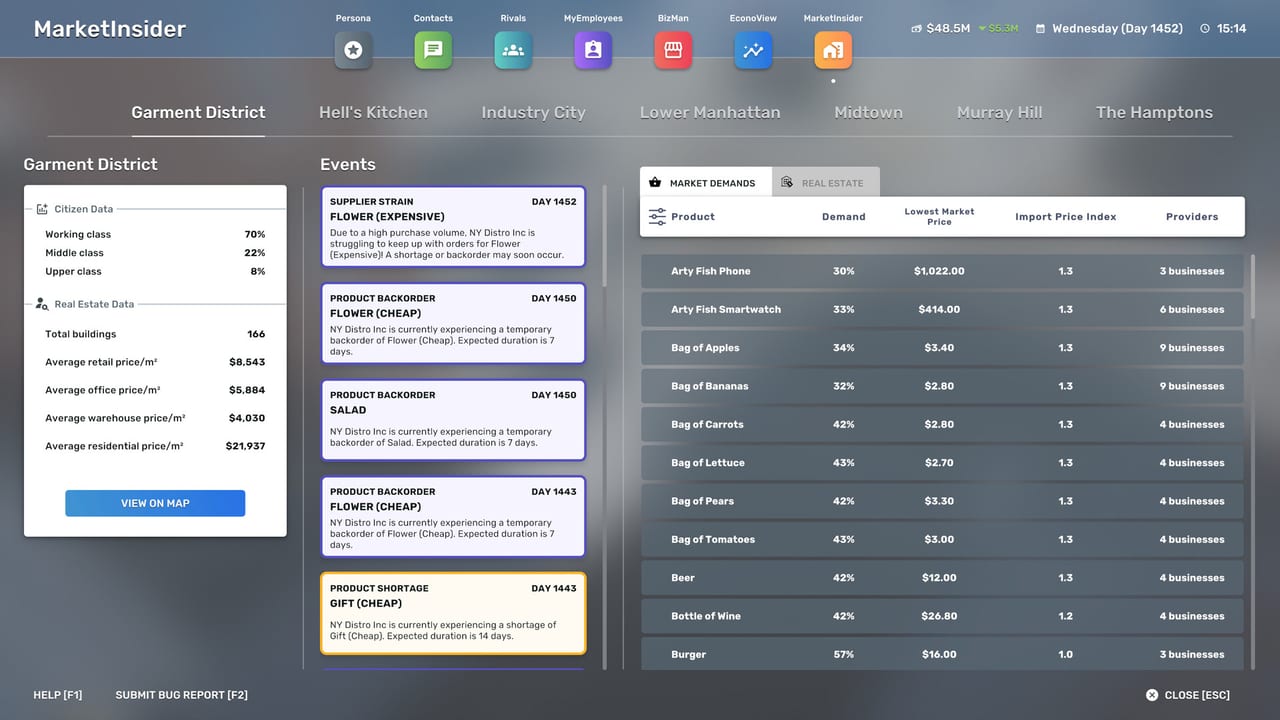
Importing is how Big Ambitions stops being a walking sim and becomes a company. You visit a dock or importer once, hand the relationship to a seated purchasing agent, park the goods in a warehouse, and let a truck hit shops while you sleep. This page is the buy-side companion to headquarters. Skip it and you will keep paying Metro prices for the rest of the save.
Single-player: the importer will not text your friend. If the agent is sick, 1.0 no longer cancels the order — a small mercy. If the HQ is closed on Sunday, nothing moves. Plan around office hours.
The first handshake
Walk to the harbour contacts in person so they enter the phone. Classic names players still use: Bluestone for clothing, a seaside food importer, a jewelry-and-gifts ocean house, and a cargo outfit that is only really good for soda cans and paper bags. Your save may shuffle offices after 0.9 relocations; the rule is unchanged: talk once, call forever.
Do not sign twelve SKUs on the first visit. Sign the two or three products that already sell in your staffed shop. Confirm box size in the 1.0 importer UI before you type a fantasy number. A “cheap” crate that does not fit the van is not cheap.
Then stop going to the dock. Open BizMan, HQ tab, purchasing agent. Pick the warehouse as the drop, set a repeat that keeps a buffer, order. The vehicles page is who drives it. This page is who pays the invoice.
Agents are locations, not vibes
A purchasing agent needs a complete workstation: desk, chair, computer, mousepad if the game is fussy. Skill often adds extra importer locations they can hold. One junior cannot own every partnership. Hire from a headhunter when the role is rare; Anderson-style campaigns are for cashiers, not dock brains. See employees.
Assign the person to the contract, not merely to the building. If they sit and “do nothing,” check: HQ open, weekday, assigned partnership, destination warehouse with receiving space. Naming the desk in 1.0 helps when you have three Isaacs.
Do not import a catalogue you do not sell. Every idle pallet is rent. Every extra SKU is a chance for 1.0’s export rule to bite: exporting too much of a good drops that item’s import/export price for the rest of the week. Factories that dump overflow onto the world market can sabotage the same goods you still buy. Read factories before you overproduce jewelry to “help” the dock.
Warehouse is not optional
An importer will not teleport boxes onto a gift-shop shelf. Flow is agent → contract → warehouse receiving → logistics manager → van/truck → shop. Skip the warehouse and you have a very expensive email. Pallet shelves hold more than retail backs; that math is on the warehouse page.
Keep a buffer above the last stockout. Auto-repeat should top up, not panic-buy at 2%. If two shops share a basket, still let one warehouse feed both until the truck’s destination cap hurts. Then add a truck, not a second personality.
Pricing the buy versus the sell
“You make money when you buy” means cost of goods, not a 400% sticker. Market Insider still sets what the street will pay. A cheap import of a 20% demand SKU is a museum. Import the hot basket in products, then let the pricing manager tune neighborhoods after you understand white/yellow/red yourself.
Metro and local wholesalers remain valid for day-one restocks and for SKUs you barely sell. The import jump is for the hero line. Mixing both is normal. Pride is not a margin.
A first-month import script
- Staff one shop so you are not the receiving clerk — getting started.
- Visit two importers that match that shop’s basket.
- Rent a modest warehouse with a van bay, not a Q-lot.
- Seat one purchasing agent and one logistics lead at HQ.
- Repeat-order the hero SKUs only. Watch one truck complete.
- Widen the catalogue after a clean week.
- Only then think about a factory replacing an import.
Failure modes
- Signing a food importer for a jewelry shop because the dock was closer.
- Ordering in pieces that do not match shelf or van slots.
- HQ on a nightclub calendar.
- Exporting factory overflow of the same SKU you still import, then wondering why the week’s price died.
- Firing the agent while a repeat is live and blaming the dock.
When the first automatic crate hits Garment while you sleep, importing has done its job. Next reads: make money for what to do with the margin, banking if the invoice needs a loan, and version 1.0 for the export-index and sick-agent fixes.
Frequently Asked Questions
Quick answers to the most common questions.
Do I have to visit importers in person in Big Ambitions?
Once, to unlock the contact. After that, the purchasing agent orders from HQ while you stay in the city.
Why is my purchasing agent idle?
No complete desk, HQ closed, weekend, or no warehouse destination. Seat them and point the contract at receiving shelves.
Can I import straight into a store?
Not as a real pipeline. Use a warehouse and a logistics vehicle. Metro-style wholesaler runs are the only exception.
Did 1.0 change importing?
Yes. Box sizes show in the UI, sick agents no longer cancel orders, and over-exporting can drop a week's import price.